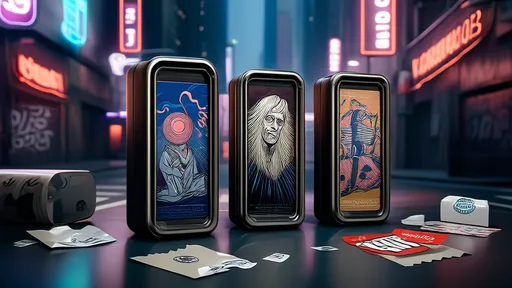
The retail world has been quietly undergoing a peculiar revolution - one where consumers willingly pay premium prices for products they cannot see beforehand. This phenomenon, known as the blind box trend, has evolved from children's collectibles to high-end designer collaborations, creating an entirely new marketing playbook that thrives on mystery, scarcity, and the thrill of the unknown.
At its core, the blind box model sells anticipation. What began as simple mystery toys in vending machines has blossomed into a sophisticated marketing strategy embraced by luxury brands and avant-garde designers alike. The psychology is irresistible: that tantalizing moment before unboxing when anything seems possible - will it be the common variant or the ultra-rare collector's piece? This emotional rollercoaster has proven far more effective than traditional retail at driving repeat purchases and social media buzz.
Designer collaborations have taken the blind box concept to unprecedented heights. When streetwear icon KAWS first partnered with Japanese toy company Medicom Toy to release limited edition BE@RBRICK figures in randomized packaging, the art world took notice. Suddenly, collecting became less about the object itself and more about the cultural capital of participating in the hunt. These weren't just toys; they were wearable art pieces with secondary market values that often eclipsed their original prices tenfold.
The success of such collaborations lies in their dual appeal. For brands, blind boxes represent a way to move inventory without revealing less popular designs. For consumers, they offer democratic access to limited edition items that might otherwise be reserved for VIP clients. When French luxury house Maison Margiela launched its "Replica" fragrance line in mystery packaging, the collection sold out within hours despite customers not knowing which scent they'd receive. The brand later revealed this generated 300% more social media engagement than their standard product launches.
What makes these marketing strategies particularly brilliant is their built-in virality. Unboxing videos have become their own genre on YouTube and TikTok, with collectors filming their reactions to discovering rare variants. This organic content creates perpetual hype cycles that traditional advertising could never replicate. When Japanese designer Nigo collaborated with Adidas on a series of blind box sneakers, the resulting social media frenzy saw certain colorways reselling for over $5,000 within days of release.
The blind box model has also allowed avant-garde designers to connect with younger audiences in unexpected ways. Belgian designer Walter Van Beirendonck, known for his theatrical runway shows, found new fans through a series of mystery action figures featuring his most iconic designs. These collectibles served as both art objects and entry points for Gen Z consumers who might never attend Paris Fashion Week but could participate in the designer's universe through these accessible (yet still exclusive) products.
Luxury brands have taken note of how blind boxes create artificial scarcity without damaging brand prestige. Italian leather goods brand Valextra recently tested the waters with a "Secret Project" series where customers purchased unmarked boxes containing random accessories from past collections. The initiative not only cleared warehouse inventory but generated waitlists for future mystery drops - something unheard of for a heritage brand known for its conservative approach to retail.
The collectible aspect transforms shopping into a game. Chinese platform POP MART has perfected this approach, turning designer collaborations into competitive collecting with their "hidden rare" system where certain figures appear in just 1 of every 144 boxes. This gamification has proven particularly effective with millennial and Gen Z consumers who grew up with loot boxes in video games and now seek similar dopamine hits in physical products.
Some of the most successful implementations have come from unexpected crossovers. When British ceramics brand Wedgwood collaborated with street artist Stik on a series of mystery boxed figurines, they attracted an entirely new demographic to the 263-year-old company. The collection's success demonstrated how blind boxes could serve as cultural bridges between seemingly disparate audiences.
Critics argue this marketing model promotes wasteful overconsumption, and they're not wrong. The same psychological triggers that make blind boxes so effective also encourage buying multiples in hopes of scoring rare items. However, forward-thinking brands are addressing this by incorporating sustainability into their mystery offerings. Marine Serre's "Future Wear" capsules now include upcycled pieces in their blind boxes, while Dutch denim brand MUD Jeans uses the format to sell repaired vintage jeans with unique patinas.
The blind box revolution shows no signs of slowing as designers discover new applications for the format. Recent experiments include mystery furniture drops from Scandinavian design houses and unmarked art portfolios from contemporary galleries. Even the automotive industry has dabbled in the trend, with Mini Cooper offering "Surprise Edition" vehicles featuring random color and trim combinations.
What began as a simple marketing gimmick has evolved into a sophisticated retail philosophy that taps into fundamental human desires for surprise, collection, and status. As consumer fatigue with traditional shopping grows, these mystery formats offer something increasingly rare in our algorithm-driven world: genuine unpredictability. The most successful implementations understand that the true product isn't the item in the box - it's the story customers get to tell about how they found it.
Looking ahead, we're likely to see blind box strategies merge with emerging technologies. Augmented reality previews, blockchain-verified authenticity, and AI-generated unique variants all promise to take the concept further. One thing remains certain: in an age of instant digital gratification, the physical thrill of the unknown has become retail's most valuable commodity.
The blind box revolution ultimately reveals an ironic truth about modern consumer behavior. In our data-saturated world where everything is trackable and predictable, we're willing to pay premium prices for moments of surprise. Designers who master this paradox - offering carefully curated uncertainty - will continue to thrive in retail's new mystery economy.
By /Aug 13, 2025
By /Aug 13, 2025
By /Aug 13, 2025
By /Aug 13, 2025
By /Aug 13, 2025

By /Aug 13, 2025
By /Aug 13, 2025
By /Aug 13, 2025
By /Aug 13, 2025
By /Aug 13, 2025
By /Aug 13, 2025
By /Aug 13, 2025
By /Aug 13, 2025
By /Aug 13, 2025
By /Aug 13, 2025
By /Aug 13, 2025
By /Aug 13, 2025
By /Aug 13, 2025
By /Aug 13, 2025
By /Aug 13, 2025
