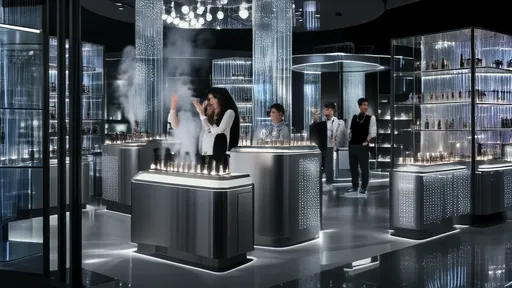
In an era where consumers crave immersive experiences, a new retail concept is quietly revolutionizing how we engage with fragrance. The rise of "scent theaters" – physical spaces that combine storytelling with olfactory design – is transforming perfume from a mere commodity into a multisensory journey. These avant-garde boutiques are rewriting the rules of fragrance retail by activating all five senses while anchoring their narratives in specific emotional landscapes.
Walking into a scent theater feels nothing like browsing a traditional perfume counter. The air hums with intentionality – each zone curated not just by fragrance family, but by complete environmental design. One moment you're in a Moroccan spice market at dusk, the sound of distant calls to prayer mingling with the scent of amber and cumin. The next, you're transported to a Kyoto bamboo forest where the crisp green aroma of vetiver blends with the whisper of leaves overhead. This isn't just sampling perfume; it's time travel through the nostrils.
The psychology behind these spaces reveals why they're so effective. Our brains process scent memories in the amygdala and hippocampus – regions tied to emotion and recollection. By constructing complete sensory environments, scent theaters create what neurologists call "context-dependent memory." Customers don't just remember liking a fragrance; they remember who they were while experiencing it. This explains why conversion rates in such environments reportedly triple those of traditional fragrance displays.
At the vanguard of this movement is a Paris-based concept store that recreates famous love stories through scent. Their "Romeo & Juliet" installation fills a Verona-inspired courtyard with the tension of young passion – bergamot and metallic notes evoke dueling swords, while a base of vanilla and skin musk lingers like a clandestine embrace. Visitors don't test perfumes here; they inhabit them. The commercial results speak volumes: average dwell time of 47 minutes (versus the industry standard 8 minutes) and basket sizes 60% larger than conventional perfumeries.
What makes these spaces truly innovative is their rejection of traditional fragrance classification. Gone are the predictable citrus-floral-woody taxonomies. Instead, scents are organized by emotional resonance or situational utility. One Tokyo-based scent theater arranges its offerings by "midnight memories" – fragrances designed specifically for recalling (or creating) pivotal life moments after dark. Another in Berlin categorizes scents by "unspoken desires," with olfactory profiles crafted to communicate complex emotions without words.
The business implications extend far beyond retail. Luxury hotels are commissioning scent theaters as permanent lobby installations, while property developers incorporate them into high-end residential showrooms. One Manhattan real estate firm reported a 22% increase in serious inquiries after introducing a scent theater that allowed potential buyers to "experience" different times of day in unfurnished units through carefully designed aroma sequences.
Critics argue these concepts risk reducing profound olfactory artistry to mere entertainment. Yet proponents counter that by making fragrance accessible through narrative, they're actually elevating public appreciation for perfumery as an art form. The numbers support this view – attendees of scent theater workshops show significantly higher willingness to pay for niche fragrances compared to traditional retail customers.
As the line between commerce and art continues to blur, scent theaters represent more than a retail trend. They signal a broader cultural shift toward experiential authenticity – the growing consumer demand for products that don't just serve practical needs, but facilitate meaningful personal experiences. In an increasingly digital world, perhaps what we crave most are spaces that remind us, quite literally, to stop and smell the roses – even if those roses are part of an elaborately designed sensory symphony.
The next evolution may already be underway. Early prototypes of "responsive scent theaters" use AI and biometrics to adjust aromas in real-time based on visitors' physiological responses. Imagine spaces that evolve their olfactory landscapes as your heartbeat changes, or that introduce complementary notes when sensors detect pupil dilation. This isn't the future of fragrance retail – it's the future of human experience design, with scent as its most potent vocabulary.
By /Aug 13, 2025
By /Aug 13, 2025

By /Aug 13, 2025
By /Aug 13, 2025
By /Aug 13, 2025
By /Aug 13, 2025
By /Aug 13, 2025
By /Aug 13, 2025
By /Aug 13, 2025
By /Aug 13, 2025
By /Aug 13, 2025
By /Aug 13, 2025
By /Aug 13, 2025

By /Aug 13, 2025

By /Aug 13, 2025
By /Aug 13, 2025
By /Aug 13, 2025
By /Aug 13, 2025
By /Aug 13, 2025
By /Aug 13, 2025
