The global manufacturing landscape is undergoing a seismic shift as companies embrace the next generation of localized production. Dubbed "Localized Production 2.0," this revolution promises to redefine traditional supply chains by compressing lead times to an unprecedented 48 hours. What began as a pandemic-era contingency plan has now evolved into a strategic imperative for businesses seeking resilience, agility, and competitive advantage in an increasingly volatile marketplace.
At the heart of this transformation lies a radical reimagining of how goods are conceived, produced, and delivered. Gone are the days of months-long production cycles and ocean freight delays. Instead, companies are building hyper-responsive micro-factories and distributed manufacturing networks that can pivot on demand. The 48-hour supply chain isn't just about speed—it's about creating a living, breathing production ecosystem that responds to real-time market signals.
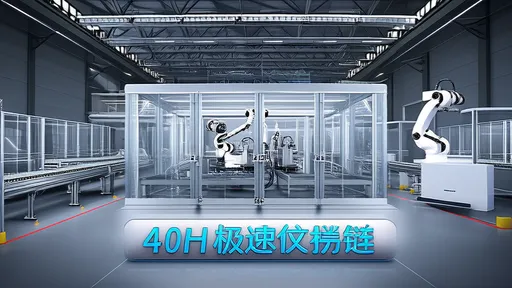
Several technological enablers have converged to make this possible. Advanced 3D printing now allows for on-demand part manufacturing at quality levels matching traditional methods. AI-driven production scheduling systems dynamically allocate resources across networks of small-scale facilities. Perhaps most crucially, the maturation of digital twin technology enables virtual prototyping and testing that slashes development timelines from weeks to days.
The implications for inventory management are profound. Where traditional models required maintaining vast buffer stocks to hedge against disruptions, Localized Production 2.0 operates on a just-in-time philosophy amplified by real-time data analytics. Sensors embedded throughout the supply network provide continuous visibility, allowing companies to anticipate shortages before they occur and reroute production accordingly.
This shift is particularly transformative for industries with historically long lead times. Automotive manufacturers, for instance, are establishing regional hubs that can produce customized vehicle components within two days of order receipt. In consumer electronics, companies are leveraging localized assembly to offer market-specific product variations without the cost penalties of small batch production.
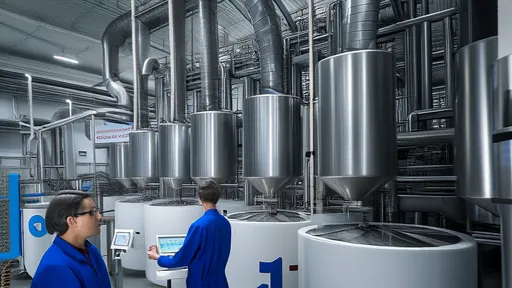
The human element remains critical in this high-tech equation. Rather than replacing workers, these systems are creating new categories of hybrid technical roles that blend traditional manufacturing skills with digital fluency. On factory floors, augmented reality interfaces guide technicians through complex assembly processes, while data scientists work alongside production managers to optimize workflows.
Environmental considerations are also driving adoption. By eliminating the need for long-distance shipping and reducing overproduction, 48-hour supply chains can significantly lower carbon footprints. Localized production facilities are increasingly powered by renewable energy sources, creating closed-loop systems where waste from one process becomes input for another.
Of course, challenges remain. Establishing distributed manufacturing networks requires substantial upfront investment in both physical infrastructure and digital integration. Cybersecurity concerns multiply as production systems become more interconnected. And perhaps most fundamentally, companies must rethink their entire organizational structures to support this new paradigm of decentralized decision-making.
Early adopters are already seeing remarkable results. One European appliance manufacturer reduced its time-to-market from 90 days to 60 hours while cutting production costs by 18%. A North American medical device company slashed its inventory carrying costs by 40% while improving order fulfillment rates. These aren't incremental improvements—they represent a fundamental rewriting of the rules of manufacturing competitiveness.
As the technology matures and more companies make the transition, we're likely to see the 48-hour standard become table stakes across multiple industries. The businesses that will thrive are those viewing Localized Production 2.0 not just as a supply chain upgrade, but as the foundation for entirely new business models and customer value propositions.
The race to build tomorrow's supply chains is well underway. In an era where consumer expectations evolve by the hour and global disruptions have become the norm, the ability to produce what's needed, where it's needed, within two days may soon separate market leaders from laggards. What began as a survival strategy is rapidly becoming the blueprint for manufacturing's future.

By /Aug 13, 2025

By /Aug 13, 2025

By /Aug 13, 2025
By /Aug 13, 2025

By /Aug 13, 2025
By /Aug 13, 2025

By /Aug 13, 2025

By /Aug 13, 2025

By /Aug 13, 2025

By /Aug 13, 2025

By /Aug 13, 2025

By /Aug 13, 2025

By /Aug 13, 2025

By /Aug 13, 2025

By /Aug 13, 2025

By /Aug 13, 2025

By /Aug 13, 2025

By /Aug 13, 2025

By /Aug 13, 2025

By /Aug 13, 2025
