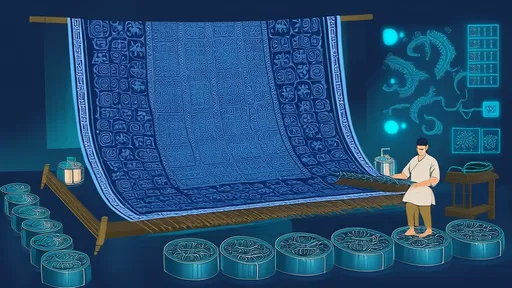
The rhythmic dipping of fabric into vats of indigo, the precise folding techniques passed down through generations, and the alchemical transformation of white cloth into vibrant patterns - India's tie-dye heritage is experiencing a remarkable renaissance. Across the dusty lanes of Jaipur, the riverbanks of Bhuj, and the artisan clusters of Pochampally, a quiet revolution is unfolding where artificial intelligence meets the ancient 108-step Bandhani process.
The Sacred Geometry of Knots
For over 5000 years, Indian artisans have practiced Bandhani tie-dye, a method so intricate that master dyers compare it to meditation. The process begins with the sacred number 108 - representing cosmic order in Hinduism - with each step from fabric selection to final rinse holding ritual significance. Women in Rajasthan's desert communities would traditionally spend weeks tying thousands of microscopic knots using fingernails darkened by years of dye exposure, creating patterns that told stories of harvests, weddings, and monsoons.
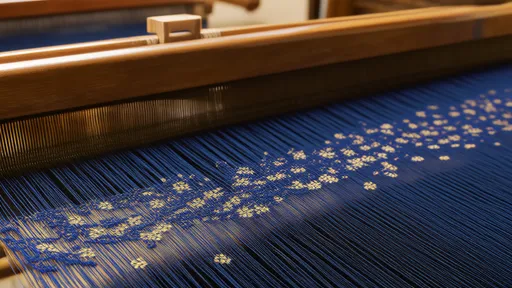
Modern AI systems are now decoding what master craftspeople call "the language of the knots." Computer vision algorithms analyze centuries-old shawls and turbans in museum collections, identifying 47 distinct regional knotting styles that were previously undocumented. In Ahmedabad's National Institute of Design, researchers have created neural networks that can predict how a particular knot configuration will interact with organic dyes, reducing material waste by 62% compared to traditional trial-and-error methods.
The Algorithmic Dyer's Eye
What takes human artisans decades to develop - the intuitive understanding of how tightly to pull a thread or how long to soak fabric in fermented jaggery solutions - machine learning models are acquiring through spectral image analysis. Startups like Dastkari Haat are employing convolutional neural networks to scan vintage Bandhani patterns, then generating templates that help new artisans achieve complex designs in half the time. The AI doesn't replace the human touch; rather, it serves as a digital apprentice that remembers every variation of the 108 steps across different climates and water pH levels.
In Kutch, where the Khatri community has practiced tie-dye for 12 generations, elders initially resisted the technology. "We thought computers would make our knowledge worthless," says 68-year-old Abdulrahim Khatri. "But the AI shows us patterns our ancestors used but we had forgotten." His workshop now uses a tablet app that suggests optimal knot placements based on the lunar cycle's effect on natural dyes - a fusion of astrophysics and artisan wisdom.
Reviving Lost Colors Through Spectral Archaeology
One of AI's most profound impacts lies in resurrecting extinct natural dye recipes. By analyzing molecular traces on textile fragments from archaeological sites, machine learning models have reconstructed 23 forgotten pigment formulas, including a luminous green derived from pomegranate rind and fermented lentils that disappeared in the 17th century. Natural dye expert Dr. Priya Kapoor notes, "The algorithms found patterns in plant combinations that took medieval dyers centuries to discover. We're essentially time-traveling through data."
This color revival has economic implications. Export demand for "heritage hues" has increased 340% since 2020, with Parisian fashion houses paying premiums for shades like "Monsoon Indigo" - a variable-intensity blue that AI helped standardize without chemical stabilizers. The breakthrough came when researchers realized traditional dyers were unconsciously adjusting dye vat temperatures based on the sound of bubbles, a practice now quantified through audio analysis algorithms.
The Paradox of Preservation Through Innovation
Critics argue that digitizing sacred processes risks cultural appropriation or dilution. But practitioners emphasize that AI serves as both archive and amplifier. The 108 steps remain sacrosanct - no machine can replicate the devotional songs sung during dyeing or the blessing of tools - but optimization occurs in material preparation and waste reduction. Solar-powered microfactories now dot Rajasthan, where artisans use AI-assisted drying racks that prevent color bleeding while consuming 90% less water than traditional methods.
Perhaps the most unexpected development is how traditional knowledge is improving AI itself. The complex decision trees of natural dye formulation have inspired more nuanced machine learning architectures. MIT researchers recently published a paper on "Bandhani Networks" - neural networks that incorporate artisan-style conditional branching, proving particularly effective for climate modeling and drug discovery.
As sunset paints the sky over Jaipur's dye pits the color of crushed pomegranates, third-generation dyer Lakshmi Mehta reflects on the transformation: "My grandmother tied knots until her fingers curved like mango stems. My daughter designs with light on glass screens. But the cloth still remembers." In this unlikely marriage of algorithms and ancestry, India's textile legacy finds its future - not in replacing the 108 steps, but in ensuring they continue for 108 generations more.

By /Aug 13, 2025

By /Aug 13, 2025

By /Aug 13, 2025

By /Aug 13, 2025

By /Aug 13, 2025

By /Aug 13, 2025

By /Aug 13, 2025

By /Aug 13, 2025

By /Aug 13, 2025

By /Aug 13, 2025

By /Aug 13, 2025

By /Aug 13, 2025
By /Aug 13, 2025
By /Aug 13, 2025
By /Aug 13, 2025
By /Aug 13, 2025

By /Aug 13, 2025

By /Aug 13, 2025

By /Aug 13, 2025

By /Aug 13, 2025
